Skip to content


Fast, Free Standard Delivery
Choose a Delivery Date
Outstanding value

When is the Best Time of Year to Lay Turf?
Laying new turf is undoubtedly one of the fastest ways to breathe new life into a tired garden.
However, while the process itself may be straightforward, choosing the right time of year can make a significant difference to the final result. After all, factors such as weather conditions, soil temperature, moisture levels and sunlight exposure all play a crucial role in how quickly turf roots establish and how healthy your lawn remains in the long term.
With that in mind, this guide explores both the best and worst seasons for laying turf. In addition, it provides practical tips to help you achieve a strong, vibrant lawn, no matter the time of year.
Why Timing Matters When Laying Turf
To begin with, turf establishes most successfully when the soil is warm enough to encourage root growth and moist enough to help it settle quickly. When these conditions are met, roots can anchor firmly and begin absorbing nutrients efficiently.
Inversely, if turf is laid in the wrong conditions, several problems can arise. For example:
Slow or shallow rooting, which weakens long-term growth
Patchy or yellowing grass, often caused by stress
Increased watering requirements, particularly in extreme heat
Greater vulnerability to heat or frost damage, depending on the season
Therefore, by understanding how each season influences turf growth, you can make a more informed decision and ultimately choose the ideal time to lay turf in your garden.
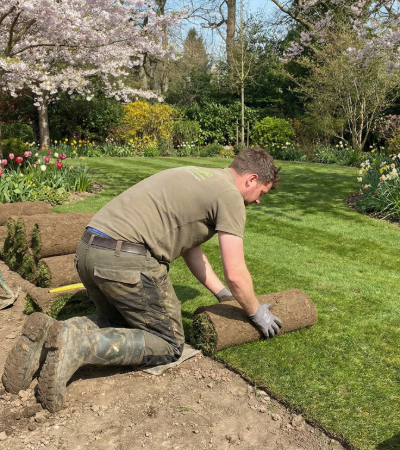
Laying Turf in Spring – One of the Best Times
Best for: Most gardens, new homeowners, and full-lawn renovations
When it comes to timing, spring is widely considered one of the very best seasons for laying turf. This is largely because it offers an ideal balance of mild temperatures and regular rainfall. As the soil gradually warms up after winter, it naturally creates the perfect conditions for quick and healthy root establishment.
At the same time, by choosing spring, you avoid the intense heat of summer, which can place unnecessary stress on newly laid turf and increase watering demands. As a result, your lawn has a much better chance of establishing evenly and thriving long term.
Benefits:
Encourages strong and consistent root growth
Typically requires less intensive watering thanks to seasonal rainfall
Provides the perfect opportunity for full garden transformations or renovations
Tips for Success:
Whenever possible, lay turf earlier in the spring season to maximise the growing window before summer arrives.
In addition, prepare the soil thoroughly by incorporating fresh topsoil and compost, thereby giving your turf the nutrient-rich foundation it needs for a strong start.
Ultimately, by taking advantage of spring’s favourable conditions, you set your new lawn up for healthy establishment and long-lasting success.
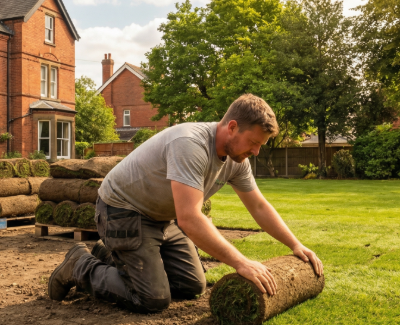
Laying Turf in Summer – Extra Care Needed in Hot Conditions
Best for: Quick garden upgrades when time is limited
While summer is generally less ideal for laying turf particularly during periods of extreme heat it is still possible to achieve great results with careful planning and attention.
In fact, if you take the right precautions, early summer can still be a viable window for quick garden transformations.
That said, summer presents several unique challenges that require extra vigilance:
High heat and strong sunlight can quickly dry out newly laid turf, putting stress on roots.
Frequent watering is essential, sometimes even twice a day, to keep the soil consistently moist.
Turf shrinkage and gaps are more likely if the rolls dry out or aren’t properly maintained.
Tips for Success:
Lay turf during cooler parts of the day, such as early morning or late afternoon, to reduce heat stress.
Water immediately and consistently for the first 2–3 weeks, ensuring the soil beneath stays moist and encourages root establishment.
Lightly mulch the soil before laying, as this helps retain moisture and protect the roots during the hotter months.
By taking these extra steps, even a summer turf project can establish successfully, giving you a healthy, green lawn despite the challenging conditions.
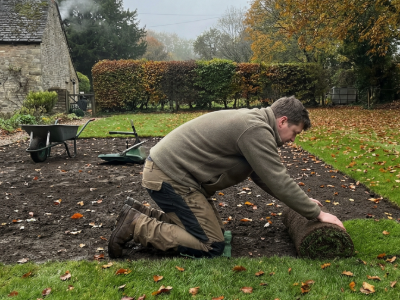
Laying Turf in Autumn – The Optimal Season for Many Gardeners
Best for: Reliable, fuss-free turf establishment
For many gardeners, autumn is widely regarded as the most favourable season for laying turf. This is because the soil retains warmth from the summer months, rainfall becomes more regular and temperatures are generally mild, all of which combine to create excellent conditions for roots to establish quickly and effectively.
Compared with other seasons, autumn offers several distinct advantages:
Strong, deep root growth before the onset of winter, giving your lawn a healthy head start for the following year.
Minimal watering required, thanks to cooler temperatures and consistent rainfall.
Reduced stress on the grass compared with the intense heat of summer, meaning the turf adapts more easily to its new environment.
Tips for Success:
Lay turf before the first frost to ensure it has enough time to establish roots before winter sets in.
Avoid working on saturated soil, as excess water can slow establishment and create uneven patches.
By taking advantage of autumn’s ideal conditions and following these practical tips, you can give your lawn the best possible start and enjoy strong, vibrant growth well into the colder months.
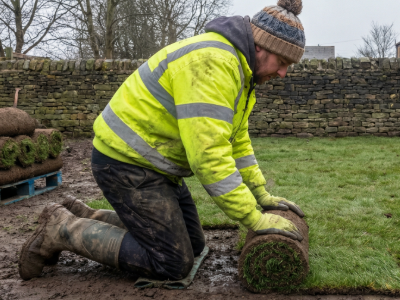
Laying Turf in Winter – Avoid Frosty Conditions
Best for: Mild winters and periods without frost
Although winter is generally not the ideal time to lay turf, it can still be done under certain conditions, specifically when the ground is neither frozen nor waterlogged.
While growth will be minimal during the colder months, the turf can still settle into the soil, giving it a head start to root once spring arrives.
That said, winter turfing comes with a number of challenges that require careful consideration:
Frost can prevent the turf from rooting, meaning your lawn may struggle to establish if temperatures drop too low.
Soil can be muddy or difficult to prepare, making it harder to create a level, firm foundation.
Growth is extremely slow, so don’t expect immediate results like you would in warmer seasons.
Tips for Success:
Never lay turf on frozen ground, as this will prevent roots from establishing and can damage the turf.
Ensure good drainage to reduce the risk of root rot caused by excess water.
Manage expectations, knowing that little visible growth will occur until temperatures rise in spring.
By carefully timing your winter turfing and following these precautions, you can still give your lawn a chance to settle and prepare for strong growth once warmer weather returns.
So, When Is the Best Time to Lay Turf?
When it comes to timing, certain seasons clearly offer better conditions for turf establishment than others. Autumn is widely considered the ideal season, closely followed by spring, as both provide the perfect combination of mild temperatures, soil warmth and regular rainfall.
That said, laying turf can also be successful in early summer or during a mild winter, provided you take extra care to manage watering, protect the grass and ensure the soil is in good condition.
Ultimately, choosing the right season based on your local climate and personal schedule will give your turf the best chance to establish quickly and grow into a strong, healthy, and long-lasting lawn.
Final Tips for Successful Turf Laying
In addition to timing, proper preparation and care are essential for achieving a beautiful lawn:
Prepare the soil thoroughly by adding quality topsoil and compost to create a nutrient-rich foundation.
Level the ground carefully to prevent water pooling and uneven growth.
Water immediately after laying to help the roots settle into the soil.
Avoid walking on the turf until it has firmly rooted to prevent damage and compaction.
Pay extra attention to edges, as they tend to dry out faster than the rest of the lawn.
By combining the right timing with careful preparation and ongoing care, your garden will reward you with a lush, vibrant lawn that not only looks beautiful but lasts for years to come.